


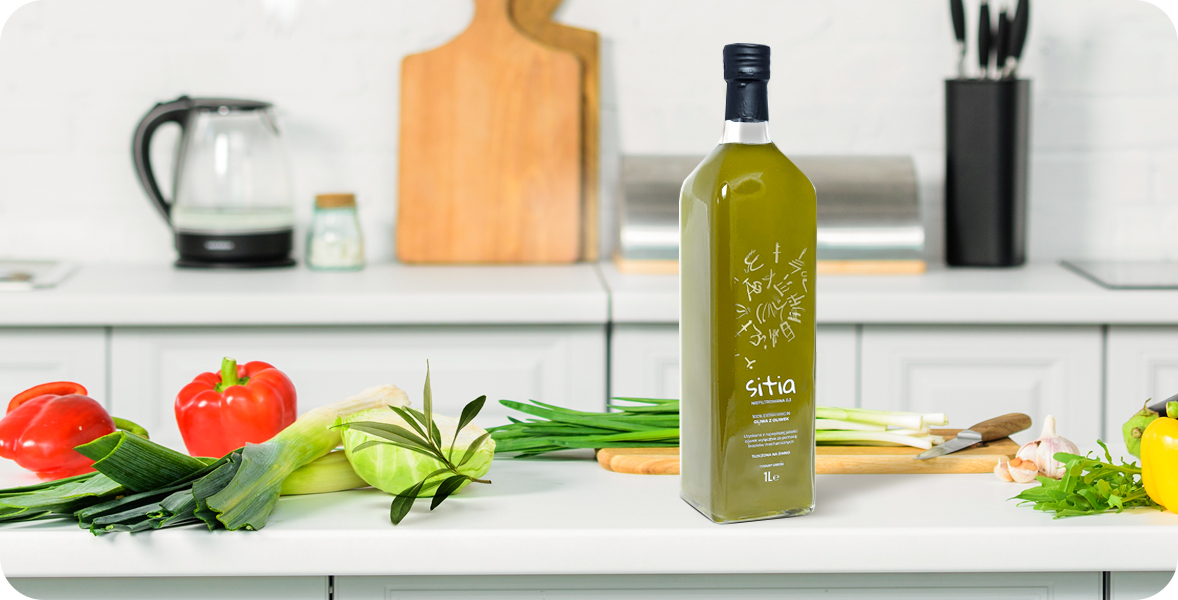
Sitia 0.3% Olive Oil 1L - LIMITED EDITION
Hurry up! Only item(s) items left in stock
Couldn't load pickup availability
Description


Nutritional values per 100g of product: 3389 kJ/ 824 kcal, Fat 91.6g, of which saturated fatty acids 12.6g, monounsaturated 72.2g,
polyunsaturated 6.8g, Carbohydrates 0g, of which sugars 0g, Protein 0g, Salt 0g.
How to store olive oil?
Olive oil should be stored in a cool, dark place, such as a refrigerator. This can help preserve its freshness and aroma. Avoid storing olive oil in a place where it is exposed to sunlight or another heat source, as this can cause a loss of flavor and aroma. Olive oil should be stored in a tightly sealed container to prevent it from drying out. It is also important to remember that olive oil tends to change color and smell over time, so it should be consumed within a few months of opening.
What does "cold-pressed" olive oil mean?
Cold-pressed olive oil is oil that has been produced without the use of heat or chemicals. This process involves pressing raw olives using a high-quality machine, such as a slow-speed press, where the temperature is maintained below 27 degrees Celsius. This allows the oil to retain more nutrients and aroma than hot-pressed oil or oil produced using chemicals. Cold-pressed olive oil is considered superior in quality to hot-pressed oil or oil produced using chemicals.
What does it mean when olive oil is cloudy?
If olive oil is cloudy, it means that it has a non-uniform structure and is not completely transparent. This can be caused by the presence of small particles of pulp or olive pits that were not completely eliminated during the pressing process. Cloudy olive oil is not a defect, but it may indicate that it was produced by hand or by traditional methods, rather than using a modern machine. Cloudy olive oil can also have a more intense flavor and aroma than clear olive oil.
What does it mean for olive oil to be extra virgin?
Extra virgin olive oil is olive oil that meets a number of quality and origin requirements. For olive oil to be labeled extra virgin, it must be cold-pressed, i.e., without the use of heat or chemicals, and must meet specific requirements regarding its acidity level and taste. Extra virgin olive oil should have an acidity below 0.8% and meet specific requirements for taste and aroma, such as freshness, intensity, and lack of defects. Extra virgin olive oil is considered the best quality olive oil because it retains more nutrients and aroma than other types of olive oils.

What does the acidity of olive oil mean?
The acidity of olive oil refers to the content of fatty acids in the oil. The lower the acidity of the oil, the more it is valued, as this means it contains more good unsaturated fats and fewer saturated fatty acids. It is generally accepted that olive oil with an acidity below 0.8% is of good quality. The acidity of olive oil can be checked on the product label or through laboratory testing.
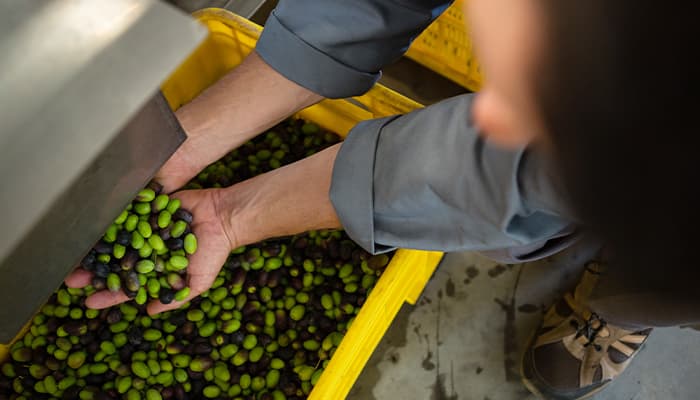
Why is olive oil pressed and bottled within 24 hours of harvest?
Olive oil loses its properties and taste over time, which is why it is important to press and bottle it as soon as possible after harvest. This way, its best taste qualities can be preserved and the loss of valuable nutrients can be prevented. Thanks to quick pressing and bottling, olive oil retains its original, fresh taste and aroma, which are so valued by consumers.
Olive oil and health:
1. Many diseases are caused by uncontrolled consumption of foods that also contain saturated fatty acids (animal fats), which cause atherosclerosis and cardiovascular diseases.
Medical studies have shown that in Mediterranean countries, particularly Greece, where olive oil consumption is high, there are fewer cardiovascular events than in any other country in the world.
By reducing the intake of animal fats and increasing the intake of olive oil in our diet, we can achieve an ideal combination for the prevention of fatal diseases such as atherosclerosis and heart attacks.
2. Recent medical studies have shown that olive oil is ideal for the needs of the human body, creating natural binding fluids, thereby relieving pain and discomfort in the bile (heartburn).
3. Millions of people worldwide suffer from stomach problems and related diseases.
The reason for this is very serious ulcers.
As is known, the use of olive oil in the diet is a beneficial factor in the functioning of the digestive system, as the oil keeps HCl low in our stomach.
Thus, the oil helps in the proper functioning of the digestive tract.
It is also proven that consuming olive oil in the diet helps:
• In good balance of human metabolism, proper development of the body and bones.
• Adequate vitamin D for the body.
Olive oil helps us to be healthy and makes our lives more enjoyable.
Written by Dimitrios Th. KREMASTINOS, Professor of Cardiology at the University of Athens, President of the Greek College of Cardiology:
A series of experimental studies have shown that the oil component contained in olives lowers cholesterol levels by 30-40%, and a number of intracellular mechanisms increase heart resistance to cellular ischemia.
Why so cheap?
The Greek delicacies that we loved so much in distant Greece made us dedicate our entire adult lives to developing a company thanks to which we offer you the most wonderful and delicious products that only local residents could enjoy for years.
Years spent in Greece, and the experience and education gained in Poland, led to the opening of our online store greckieprzysmaki.pl and a branch in Krakow at 31 Krakowska Street.
We are a young, dynamically developing Polish company that dedicates its free time to searching for the best products in terms of quality, taste, and aesthetics throughout Greece, but mainly specializes in products from Crete, where there is a unique climate.
The motto of our company is the well-being of the customer, and we care most about them by guaranteeing them healthy and delicious food. Our products are aimed at everyone who values health, unique taste, and high product quality at the lowest price on the market.
We managed to achieve a low price by bypassing unnecessary intermediaries (OUR OWN SPECIALIZED TRANSPORT) between the product manufacturer and us, which makes us the only company of its kind on the market guaranteeing safety, money savings, and easy, modern access to the customer, which is what we care about most.
"High quality is not a luxury, high quality is needed by everyone who cares about their health."
Frequently asked questions about Greek olive oil
1. What makes Greek olive oil stand out?
Greek olive oil stands out with its unique taste and aroma thanks to Greece's specific microclimate, traditional cultivation methods, and centuries-old tradition. Greece, as one of the oldest olive oil producers in the world, offers products with an intense, fruity flavor with herbal notes characteristic of the Mediterranean region. Our olive oil contains a high content of antioxidants and beneficial fatty acids, which makes it not only tasty but also healthy.
2. What types of olive oil does Greckie Przysmaki offer?
In our store, you will find a wide range of olive oils from various regions of Greece:
- Extra Virgin (highest quality, cold-pressed)
- Virgin (high quality with minimal acidity)
- Flavored olive oils (with added herbs and spices)
- Regional olive oils (with protected geographical indication)
- Organic olive oils (from certified organic farms)
Each of them has a unique flavor profile reflecting the region from which it comes.
3. How to choose the right olive oil for different uses?
- For salads and cold dishes: choose Extra Virgin olive oil with an intense, fruity flavor, which works best in dressings and marinades.
- For frying and baking: lighter varieties of Virgin olive oil are more suitable due to their higher smoke point.
- For dips and sauces: flavored olive oils with added herbs, garlic, or chili will add a unique character.
- For exquisite dishes: regional olive oils with protected designation of origin will emphasize the character of unique dishes.
4. Why pay more for high-quality olive oil?
Investing in high-quality Greek olive oil is an investment in health and taste. Higher quality olive oils:
- Contain more antioxidants and health-promoting compounds
- Offer a richer, more complex flavor profile
- Are produced with greater attention to detail and the environment
- Have certificates confirming their authenticity and quality
- Support traditional, often family-run producers
5. How to store olive oil to maintain its properties?
To ensure olive oil retains its unique taste and nutritional value, you should:
- Store it in a dark, cool place (12-18°C)
- Protect it from direct sunlight
- Keep it away from heat sources (oven, stove)
- Close the bottle tightly after each use
- It is best to choose olive oil in dark glass bottles
- Consume within 6-12 months of opening
6. What are the health benefits of regular olive oil consumption?
Regular consumption of high-quality olive oil can contribute to:
- Reducing the risk of cardiovascular diseases
- Lowering "bad" cholesterol (LDL) levels
- Supporting digestive system health
- Strengthening the immune system
- Counteracting inflammatory processes in the body
- Delaying aging processes thanks to its antioxidant content
7. Are all olive oils in the Greckie Przysmaki store authentic Greek products?
Yes, all olive oils in our store are authentic Greek products. We cooperate directly with Greek producers or produce some of our offer ourselves. Each bottle is labeled with its region of origin, and many of our olive oils have PDO (Protected Designation of Origin) or PGI (Protected Geographical Indication) certificates, which guarantee their authenticity and high quality.
8. How to recognize good quality olive oil?
Good quality olive oil:
- Has a fresh, fruity scent reminiscent of freshly cut grass or green apple
- Is characterized by a slightly spicy or bitter aftertaste (this indicates the presence of antioxidants)
- May cause a slight burning sensation in the throat (a characteristic of high oleocanthal content)
- Has a golden-green color, although the color itself is not the most important indicator of quality
- Has appropriate quality certificates or geographical indications
- Is properly packaged (dark bottle, expiration date)
9. What do the terms "cold-pressed" and "first pressing" mean?
Cold-pressed means that the olive oil has been extracted from olives at a temperature below 27°C, which allows for the preservation of maximum aroma, taste, and nutritional value.
First pressing (Extra Virgin) means that the olive oil comes from the first mechanical pressing of the olive fruit, without the use of chemical methods or high temperatures, and its acidity does not exceed 0.8%.
10. How does Greek olive oil differ from other Mediterranean olive oils?
Greek olive oil, compared to other Mediterranean olive oils:
- Is often more intense and fruity in flavor
- Is characterized by a higher content of polyphenols (antioxidants)
- Comes from trees often growing on stony, mountainous terrain, which gives it a unique character
- Is mainly produced from Koroneiki, Manaki, and Athinolia olive varieties, which have a distinctive flavor profile
- Is based on traditions dating back thousands of years (Greece is the cradle of olive culture)
11. Can I use Extra Virgin olive oil for frying?
Contrary to popular belief, Extra Virgin olive oil is suitable for frying at moderate temperatures (up to about 180°C). Thanks to the presence of antioxidants, it is more thermally stable than many other oils. However, to preserve its full flavor and health properties, for intensive frying at high temperatures, we recommend Virgin olive oils, and the highest quality Extra Virgin olive oils should be reserved for raw applications where their unique taste will fully develop.
12. What are olive oils with a protected designation of origin?
Olive oils with a protected designation of origin (PDO) are products whose entire production process – from olive cultivation to bottling – takes place in a specific geographical region and according to traditional methods. This designation guarantees the authenticity and high quality of the product. Our offer includes, among others, PDO olive oils from the regions of Kalamata, Sitia (Crete), Kolymvari (Crete), and Chania.
