


Chalkidiki Green Olives in Brine 200g
Hurry up! Only item(s) items left in stock
Couldn't load pickup availability
Description


What are Halkidiki olives?
Halkidiki olives are a variety of olives originating from the Halkidiki region in Greece. They are characteristic due to their triangular shape and delicate, slightly salty taste. Halkidiki olives are grown in Halkidiki, where they benefit from natural climatic and soil conditions, making them very tasty and aromatic. They are often used as an addition to salads and main courses, as well as a snack. Halkidiki olives are also valued for their health properties, as they are rich in valuable nutrients such as vitamins E and K and unsaturated fatty acids.
How to serve Halkidiki olives?
Halkidiki olives can be served in many ways, depending on taste preferences. Most often, they are served as an addition to salads, main courses or as a snack. They can also be added to sandwiches, pasta, or casseroles. Halkidiki olives are also often served with cheeses, cold cuts, and other snacks. They can be served alone or in combination with other ingredients, such as tomatoes, cucumbers, onions, or peppers. It is worth trying different ways of serving Halkidiki olives to find your favorite and enjoy their taste and aroma.
What Greek dishes can be prepared with Halkidiki olives?
If you want to prepare Greek dishes using Halkidiki olives, consider the following options:
- Greek salad - a salad consisting of Halkidiki olives, tomatoes, cucumbers, onions, feta, and olive oil.
- Gyros - a dish consisting of grilled meat (e.g., chicken or chickpeas) served with Halkidiki olives, tomatoes, cucumbers, onions, and Greek salad.
- Fasolada - bean and vegetable soup, served with Halkidiki olives and sprinkled with goat feta cheese.
- Souvlaki - grilled pieces of meat (e.g., chicken or chickpeas) served on a skewer with Halkidiki olives, tomatoes, cucumbers, and Greek salad.
- Moussaka - a dish consisting of layers of minced meat, eggplants, and potatoes, served with béchamel sauce and sprinkled with goat feta cheese.
Halkidiki olives are versatile and can be added to many different Greek dishes to give them a characteristic taste and aroma. It is worth experimenting with different combinations and preparing your favorite Greek dishes using Halkidiki olives.
Did you know that …
One interesting fact about Halkidiki olives is that they are among the oldest olives in the world. Olive cultivation in Halkidiki dates back to antiquity and was an important element of the culture and economy of this region. Halkidiki olives were valued for their taste, aroma, and health properties. To this day, they are produced according to traditional methods and enjoy great popularity among lovers of Greek cuisine. Halkidiki olives are also often used in the production of olive oil, which is one of the best in the world.
How to store olives after opening?
After opening, olives should be stored in the refrigerator, in a tightly sealed container or jar. This way, they can be kept for several weeks, maintaining their freshness and taste. It is important to avoid storing olives at room temperature, as this may cause them to lose their taste and aroma. After opening, olives should also be stored in a suitably clean and dry place to prevent spoilage. Before serving olives after opening, they should be drained from the brine or oil.
If the olives are in oil, can I use the oil?
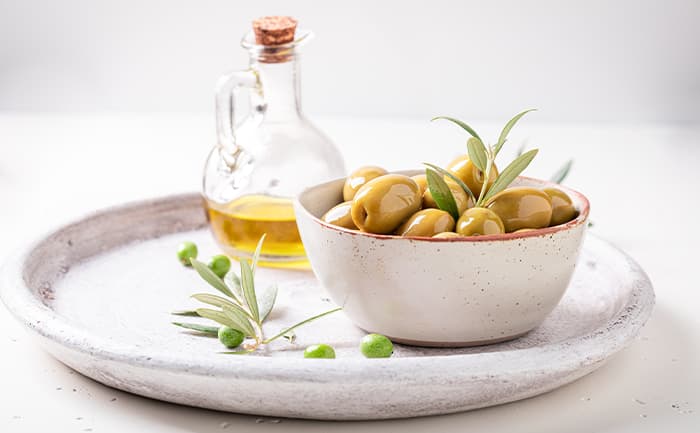
If the olives are submerged in oil, this oil can be used to prepare other dishes. The oil in which the olives are stored is suitable for further use because it contains valuable nutrients and aromas from the olives. It can be used for salads, sauces, dips, or for frying. Olive oil is also an excellent addition to bread, cheeses, or cold cuts. However, it is important to store the oil containing the olives in the refrigerator and use it within a few days of opening to maintain its freshness and quality.
Why is it worth eating olives?
Eating olives can bring many health benefits. Olives are rich in valuable nutrients, such as vitamins E and K, unsaturated fatty acids, and antioxidants. These ingredients help protect the body against the harmful effects of free radicals, preventing the development of heart disease and cancer. Olives are also a good source of dietary fiber, which supports the proper functioning of the digestive system and regulates cholesterol levels in the blood. Therefore, eating olives can contribute to reducing the risk of many diseases and improving overall health. Olives are also tasty and aromatic, so it is worth including them in your daily diet.

Do you know why olives are vacuum packed?
Olives are often vacuum packed because this storage method allows them to retain freshness and taste for a long time. Vacuum packaging involves removing air from the container in which the olives are stored. This protects the olives from the effects of oxygen and oxidation, allowing them to retain their nutritional and taste properties. Vacuum packaging also prevents the growth of bacteria and microorganisms that can cause the olives to spoil. Therefore, olives packed in vacuum packaging are usually more durable.
Why can an olive pit be present in pitted olives?
It is possible because some pitted olives may contain individual pits that were not removed during the production process. This is relatively rare, but it can happen, especially with manual sorting of olives. It is always worth checking olives before consumption to ensure they do not contain any unwanted ingredients.
Can olives be frozen?
Some people claim that olives can be frozen to extend their shelf life. However, according to most sources, freezing olives can make them hard and inedible. It is better to keep olives in the refrigerator or in a dry, cool place. Additionally, if you want to extend the shelf life of olives, you can cover them with olive oil to prevent them from drying out.
Can children eat olives?
Yes, children can eat olives, but it is important to adjust the amount to their age and bowel capacity. Olives are rich in vitamins and minerals, such as vitamin E, vitamin K, and magnesium, so they can be healthy for children, but it is important not to give them olives in excessive amounts.

What is the difference between green and black olives?
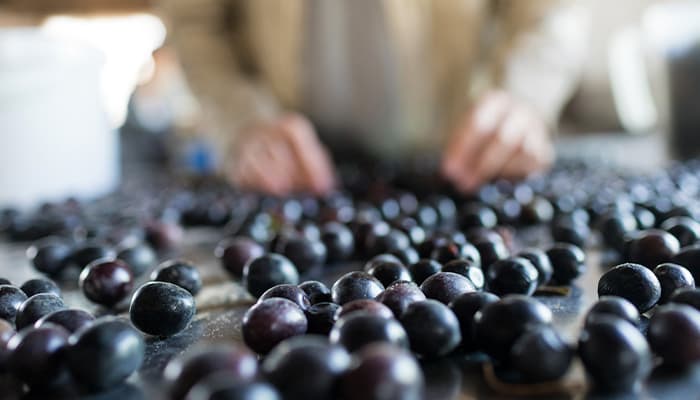
Green and black olives differ mainly in their degree of ripeness. Green olives are harvested and processed earlier, when they are still green and unripe, while black olives are harvested and processed later, when they are ripe. As a result, green olives have a sour, nutty taste and are crispier, while black olives are softer and have a sweeter, more intense flavor. Black olives also have more fat and calories than green olives. However, both varieties are rich in nutrients and can be healthy in appropriate amounts.
Ingredients: Green olives, water, sea salt, vinegar, citric acid E330, potassium sorbate E202
